Dreaming about stepping into your backyard and heading straight out to Tampa Bay? Buying a canal-front home in Apollo Beach can make that lifestyle feel very real, but waterfront homes come with a different set of questions than a typical home search. If you want to buy with confidence, you need to look beyond the view and understand boating access, permits, flood risk, and ongoing maintenance. Let’s dive in.
Why Apollo Beach attracts canal-front buyers
Apollo Beach is an unincorporated community in Hillsborough County on Tampa Bay, located between Gibsonton and Ruskin and about 12 miles southeast of Tampa. Its planning history matters because the community was shaped with canals, docks, and bay-oriented living as part of its original development pattern.
For you as a buyer, that means canal-front ownership here is often about more than scenery. It is about combining residential convenience with direct or near-direct access to the water. That mix is a big part of what makes Apollo Beach stand out in southern Hillsborough County.
Canal-front homes in Apollo Beach often appeal to buyers who want to keep a boat close to home, seasonal owners who value waterfront access, and move-up buyers looking for a stronger lifestyle fit. If that sounds like your goal, practical due diligence should be part of every showing and every offer.
Start with dock and lift questions
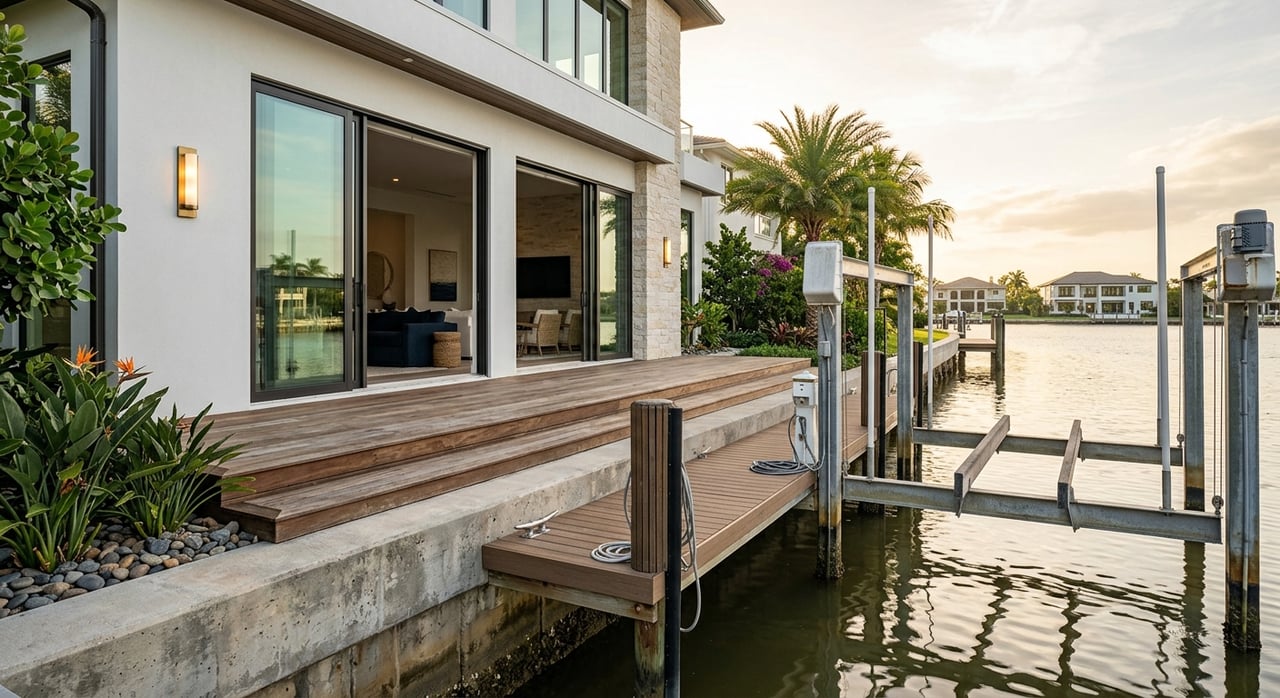
One of the first things to confirm is whether the existing dock, lift, or other waterfront improvements were properly reviewed or permitted. In Hillsborough County, floating docks, platforms, personal watercraft lifts, canopy covers, and other construction on, over, or above wetlands or surface waters may require review through the Environmental Protection Commission, especially for tidally influenced waterbodies.
Some single-family dock projects may also qualify for Florida Department of Environmental Protection self-certification. That can include a new dock with or without a boat lift, repair or replacement of an existing dock, or adding a lift to an existing dock.
Florida law also sets limits that matter to buyers. Private docks or piers generally qualify for exemption only when they stay within certain size thresholds, do not create navigational hazards or substantially impede water flow, and are the sole dock within 65 feet of shoreline. Existing docks may be repaired or replaced within 5 feet of the same location if the size does not increase.
Questions to ask at the showing
When you tour a canal-front property, ask direct questions about the waterfront features, including:
- Is the dock permitted?
- Are copies of any EPC, county, or FDEP documents available?
- Does the lift fit your boat’s size and draft?
- What does the canal look like at low tide?
- Is there visible piling rot, corroded hardware, or lift wear?
- Is the canal wide enough for turning and routine maneuvering?
These questions can help you avoid buying a home with a dock setup that looks great in photos but does not work well in daily use.
Check boating access, not just water frontage
Not every canal-front lot offers the same experience on the water. Before you fall in love with a backyard dock, think through how you would actually get from the property to Tampa Bay.
Canal width, turning space, and low-tide conditions can affect how easy it is to leave and return by boat. A home with water frontage may still feel less functional if the canal is tight or if your boat’s draft is not a good match.
You should also ask whether your boating route crosses protected or slow-speed areas. Florida Fish and Wildlife Conservation Commission information shows that Hillsborough County includes designated manatee protection zones, and Apollo Beach is closely associated with manatee activity, including around the TECO discharge canal.
That may not be a drawback, but it is part of the ownership experience. If you plan to boat often, especially in cooler months, understanding protected-water rules can help you gauge how that route fits your lifestyle.
Understand flood zone versus evacuation zone
This is one of the most important parts of buying a canal-front home in Apollo Beach. Flood zone and evacuation zone are not the same thing, and you should verify both before making an offer.
Hillsborough County advises buyers to use both the county flood-zone viewer and FEMA’s Flood Map Service Center to confirm the effective flood zone, parcel details, and base flood elevation. The county notes that high-risk flood zones are A and V zones. It also explains that most homeowner insurance does not cover flood damage and that federally backed mortgages in high-risk zones require flood insurance.
That is only part of the picture. Hillsborough County also explains that evacuation zones are based on hurricane storm surge, not FEMA flood zones. In other words, a property’s insurance and lending picture is tied to flood-zone status, while your storm planning depends on evacuation-zone status.
Why this matters in Apollo Beach
Because Apollo Beach is a coastal community, storm planning should be part of your buying checklist from day one. Hillsborough County has updated coastal flood maps in recent years, and it now publishes Apollo Beach evacuation-zone comparison maps for 2025 versus 2026.
If you are a seasonal resident or a buyer who may not live in the home year-round, that extra step becomes even more important. You do not want to treat evacuation planning as an afterthought once you already own the property.
Look closely at seawalls and shoreline condition
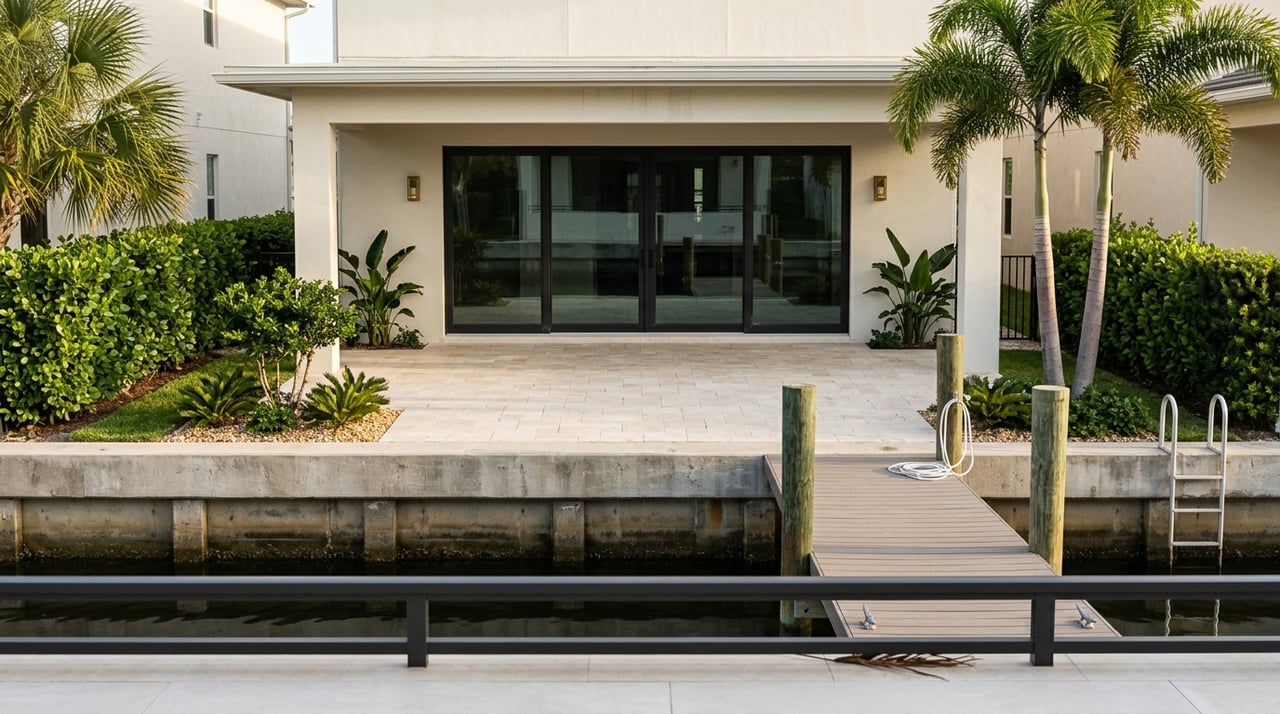
A canal-front purchase is not just about the house itself. It is also about the condition of the shoreline, seawall or bulkhead, and any stabilization features that support the lot over time.
UF/IFAS notes that Florida’s coastal shorelines face erosion pressure from storms, boat wakes, and sea level rise. It also explains that living shorelines can sometimes be more cost-effective than gray stabilization methods such as seawalls and bulkheads, though suitability depends on site conditions like wave climate, water depth, salinity, erosion rate, slope, tidal range, and proximity to structures.
For you as a buyer, the takeaway is simple. Waterfront ownership is an ongoing maintenance commitment. You should expect to monitor dock hardware, lift components, shoreline erosion, seawall or bulkhead condition, and any vegetation or stabilization work that may require review or permitting.
Signs to notice during a tour
During a showing, pay attention to more than the patio and pool. Look for visible cracking, leaning, rust, erosion, or signs that repairs may be needed along the water’s edge.
If the seller has records for shoreline work, dock repairs, or lift maintenance, that information can be very helpful. Even when a property presents beautifully, the most expensive issues are sometimes the ones closest to the water.
Think about privacy and lot orientation
Lifestyle fit matters just as much as technical due diligence. Two canal-front homes with similar square footage can feel very different depending on how the lot is positioned and what sits across the canal.
Ask yourself how much privacy you will actually have from neighboring docks, patios, or backyards. Think about sightlines from your pool, covered lanai, or main living areas. Consider how sun exposure and wind may affect comfort on the dock and patio at different times of day.
These are not code questions. They are quality-of-life questions. If you are buying canal-front property for everyday enjoyment, orientation and privacy can shape your experience just as much as boating access.
A smart buyer checklist
If you want a simple framework for buying a canal-front home in Apollo Beach, focus on these four areas first:
- Dock and lift permissions
- Flood-zone and evacuation-zone verification
- Seawall, shoreline, and maintenance condition
- Canal orientation, privacy, and everyday usability
That approach helps you balance the fun side of waterfront living with the practical side of ownership. It can also help you compare homes more clearly when several properties look appealing on the surface.
Buying canal-front property in Apollo Beach can be a great lifestyle move when the details line up with how you want to live and use the home. The right guidance can help you look past the listing photos, ask better questions, and make a more informed decision from the start. If you are exploring waterfront homes in Apollo Beach, start the conversation with Acropolis Realty Group Tampa - Main Site.
FAQs
What should you check before buying a canal-front home in Apollo Beach?
- You should verify dock and lift permissions, review flood-zone and evacuation-zone status, inspect seawall or shoreline condition, and evaluate boating access, privacy, and lot orientation.
Are flood zones and evacuation zones the same in Apollo Beach?
- No. Hillsborough County states that flood zones relate to flood risk, insurance, and mortgage requirements, while evacuation zones are based on hurricane storm surge and affect storm planning.
Can a dock or boat lift in Apollo Beach require permits?
- Yes. Hillsborough County’s EPC says docks, lifts, and other structures on, over, or above wetlands or surface waters may require review, and some single-family dock projects may qualify for FDEP self-certification.
Why does low tide matter when buying an Apollo Beach canal-front home?
- Low-tide conditions can affect boat draft, maneuvering, and how usable your canal access is in everyday conditions, so it is smart to ask how the property performs beyond listing-day photos.
What waterfront maintenance issues should buyers watch in Apollo Beach?
- Buyers should pay attention to dock hardware, lift components, piling condition, seawall or bulkhead wear, shoreline erosion, and any stabilization features that may need maintenance or permitting review.