Shopping in Ballast Point and eyeing homes near the bay? If your target price pushes your loan above the standard conforming limit, you are likely in jumbo territory. That can be exciting and a bit daunting. You want a smooth close, predictable payments, and a lender who understands waterfront nuances.
In this guide, you’ll learn the 2024 jumbo threshold for Hillsborough County, what it takes to qualify, how waterfront appraisals work, and the exact steps to secure a strong pre-approval. You will also get a simple checklist of questions to ask lenders. Let’s dive in.
What counts as a jumbo in Ballast Point
The Federal Housing Finance Agency sets conforming loan limits each year. For 2024, the baseline single-family limit is $766,550. Hillsborough County, which includes Ballast Point, is not a designated high-cost area. That means any one-unit mortgage amount above about $766,550 is generally treated as a jumbo, also called non-conforming.
Why this matters: jumbo loans follow different rules than conforming loans. You can expect tighter underwriting, more documentation, higher reserve requirements, and sometimes a rate premium compared to conforming options.
How jumbo loans differ
Jumbo programs vary by lender, but most share a few themes. Understanding these early helps you prepare a winning file.
- Credit profile: Many jumbo programs look for scores in the 700 to 740 range. A 720 or higher can improve pricing and flexibility.
- Debt-to-income (DTI): Typical caps range from about 43% to 50% with strong compensating factors. Lower DTIs give you more room.
- Down payment and LTV: Many lenders allow 10% to 20% down for purchases, translating to 80% to 90% loan-to-value. Some portfolio lenders may stretch higher with exceptional credit and reserves.
- Reserves: It is common to see 6 to 12 months of PITI required post-closing. Larger loan sizes, higher LTVs, or more complex profiles can push reserves higher.
- Mortgage insurance: Private mortgage insurance usually is not used on jumbo loans. Lenders mitigate risk with down payment, pricing, and reserves.
- Rates and terms: Pricing can carry a spread above conforming, and it varies by loan size tiers, fixed versus ARM, and your overall profile.
What lenders verify and document
You should plan to document your income, assets, and credit in detail. The more complete your packet, the faster your underwriting.
- Income verification for W-2 borrowers: recent pay stubs covering 30 days, two years of W-2s, and a verbal or written verification of employment.
- Income verification for self-employed or 1099: two years of personal and business tax returns, and often a year-to-date profit and loss statement.
- Asset documentation: two to three months of bank and brokerage statements. Lenders track large deposits and expect a clear paper trail. Gift funds may be acceptable, but seasoning rules and gift letters can apply.
- Reserves: Expect lenders to calculate post-closing reserves from liquid and seasoned assets. Retirement funds may be counted with adjustments for penalties and withholding.
- Explanations: Be prepared to explain any large transfers between accounts and to source funds clearly.
Appraisals for Ballast Point waterfront homes
Appraisals for premium and bay-adjacent homes rely primarily on the sales comparison approach. The challenge in Ballast Point is that truly comparable waterfront sales can be limited at any given time.
Here is what to expect:
- Limited comps: Appraisers may expand the search radius or use time adjustments if recent, similar waterfront sales are scarce.
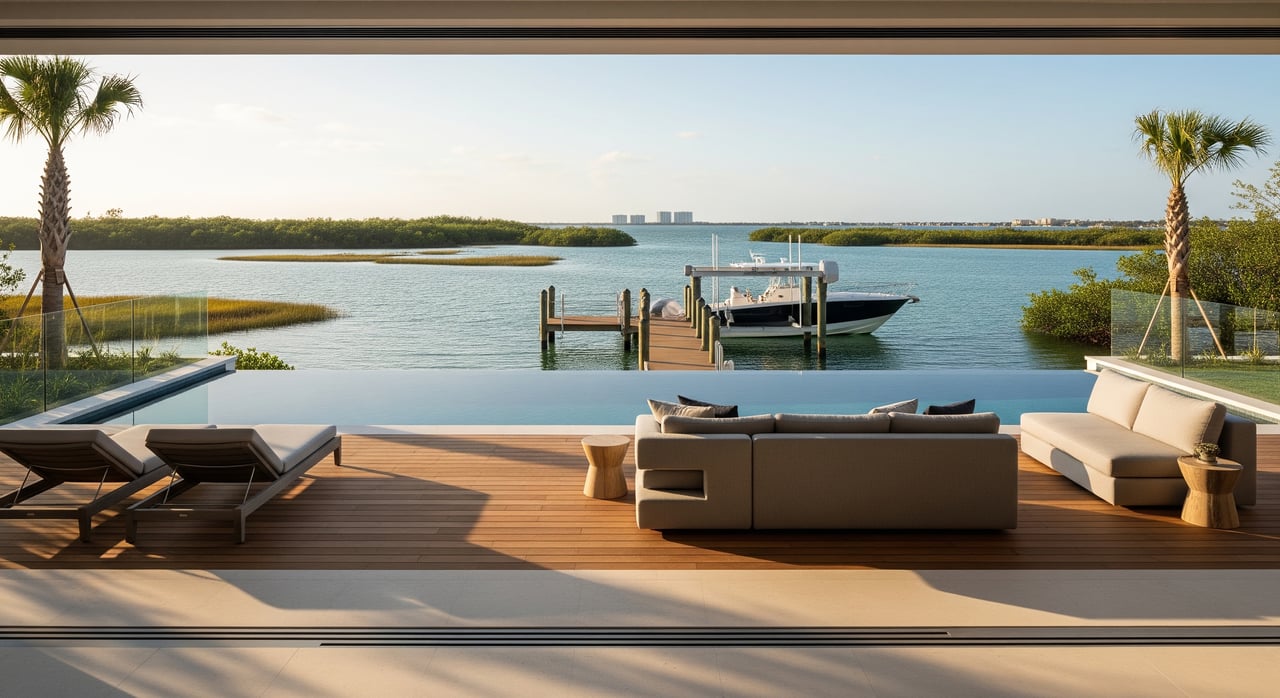
- Unique features: Docks, boat lifts, seawalls, bulkheads, and elevation above sea level can drive value differences. Appraisers assess the condition and any maintenance of shoreline structures.
- Flood and elevation: FEMA flood zone designation, elevation, and the presence of an elevation certificate can influence marketability and insurability. Appraisers often comment on these factors.
- Second opinions: Some lenders require a second appraisal or a desk review for higher loan amounts to validate value.
- Market sensitivity: Waterfront markets can react to storms, insurance cost shifts, and seasonality. Appraisals sometimes lean conservative to reflect that risk.
If an appraisal comes in below the contract price, you may need to increase your down payment, renegotiate the price, or explore lender options like a reconsideration of value. Discuss these scenarios with your agent and lender before you make an offer.
Insurance, flood, and title items that matter
Florida property insurance can be volatile. Lenders expect evidence of adequate homeowners and, if required, flood insurance before closing. Premiums and availability can affect your DTI and reserve needs.
For waterfront properties in Ballast Point, confirm the following early:
- Whether flood insurance will be required based on flood zone and elevation.
- Availability and expected cost of homeowners and flood policies.
- Any recorded tidal easements, riparian rights, or municipal permits related to docks and bulkheads, since title underwriters and lenders will want clarity.
Getting this information upfront reduces surprises and keeps underwriting on track.
Smart questions to ask lenders
Use this checklist on your first calls or emails so you compare apples to apples.
- Product and pricing
- Do you offer jumbo products for Hillsborough County, and what are the current rate ranges for my loan amount?
- Do you price jumbos differently by loan size tiers, such as $800k to $1M or $1M to $2M?
- Eligibility and documentation
- What minimum credit score and maximum DTI do you require for this jumbo program?
- What income documentation do you need for a salaried borrower versus self-employed?
- Do you accept asset depletion or offset calculations for retirement accounts?
- LTV and reserves
- What is the maximum LTV for a purchase and for a cash-out refinance?
- How many months of reserves do you require, and how do you calculate reserves if I own multiple properties?
- Appraisal and property eligibility
- Do you require a second appraisal or appraisal review above a certain loan amount?
- Are there restrictions on financing properties with docks, seawalls, or recent shoreline repairs?
- How do you treat homes in FEMA flood zones, and do you require elevation certificates or proof of flood insurance before clear to close?
- Closing timeline and contingencies
- What is your typical timeline from application to clear to close for a jumbo loan?
- If the appraisal comes in low, what options do you offer, such as reconsideration, a second appraisal, or a bridge approach?
- Rate locks and fees
- How long can I lock a rate, and what are your lock extension fees?
- What lender, underwriting, and appraisal fees should I expect for a jumbo loan?
- Local experience
- Do you have experience financing waterfront properties in Tampa Bay and Hillsborough County?
- Can you recommend local appraisers or title companies experienced with waterfront closings?
- Underwriting flexibility
- Do you underwrite only to agency guidelines, or do you also offer portfolio jumbo products with more flexible overlays?
- Do you consider compensating factors, such as strong assets or low LTV, to stretch beyond standard limits?
Steps to get pre-approved with confidence
Getting your pre-approval right strengthens your offer and keeps your closing timeline predictable.
Gather core documents now. Include recent pay stubs, two years of W-2s and, if applicable, two years of tax returns for personal and business income. Add two to three months of bank and brokerage statements, a copy of your ID, and your social security number for the credit pull. If you are buying waterfront, collect a survey if available, an elevation certificate, and photos of the seawall or dock.
Contact two to three lenders. Include at least one local bank or credit union with Tampa Bay waterfront experience and one regional or national lender for comparison. Use the checklist above to keep each quote consistent.
Request a formal pre-approval letter. Provide full documentation and authorize a credit pull. A true pre-approval, not a quick pre-qualification, gives you stronger footing when you write an offer.
Clarify appraisal expectations early. Ask whether a second appraisal is required, and whether the lender needs an elevation certificate or specific addenda for docks and seawalls. If waterfront appraisers are busy, ask about ordering timelines.
Plan for appraisal risk. Consider strategies like a larger earnest deposit, a price concession contingency, or an escrow buffer for a potential shortfall. Align this with your risk tolerance and your agent’s advice.
Prepare for reserves and insurance. Confirm how the lender wants to document reserves and when you need proof of insurance. Shop homeowners and flood policies early, since premiums and carriers can influence affordability and underwriting.
Coordinate with your agent. Share lender expectations with your agent so they can help gather property documents, spotlight the right comparable sales, and plan timelines aligned with appraisal availability.
Timeline expectations and pacing
Jumbo timelines vary by lender, staffing, appraisal availability, and how complete your documents are. Ask each lender for their typical application-to-clear-to-close timeline, what might delay it, and how they handle appraisal or lock extensions if needed. Set realistic contract dates based on that feedback.
Common pitfalls to avoid
A little preparation goes a long way. Watch for these avoidable missteps.
- Moving large funds without a paper trail or seasoning plan.
- Underestimating reserve requirements or counting assets the lender will discount.
- Overlooking insurance availability or waiting to shop policies.
- Assuming a unique waterfront home will appraise to contract price without strong comparables.
- Delaying pre-approval or relying on a soft pre-qualification.
- Not confirming dock, lift, or seawall eligibility with your lender upfront.
Your local advantage in Ballast Point
Buying in Ballast Point or along Tampa Bay involves more than rate shopping. You benefit from a team that understands waterfront appraisals, flood and elevation dynamics, and how lenders look at unique features like docks and seawalls. You also want sharp guidance on reserves, documentation, and timing so your offer stands out.
If you are exploring homes that may require a jumbo loan, connect with a local advisor who can align your lender strategy, property search, and contract terms. To start a conversation that is both strategic and easy to navigate, reach out to Acropolis Realty Group Tampa.
FAQs
What is the 2024 jumbo loan limit for Ballast Point in Hillsborough County?
- For a one-unit home, loan amounts above about $766,550 are generally treated as jumbo in Hillsborough County.
How much down payment do I need for a jumbo purchase in Ballast Point?
- Many lenders allow 10% to 20% down for purchases, with exact requirements based on your credit, reserves, and overall profile.
Do jumbo loans require private mortgage insurance (PMI)?
- PMI is typically not used on jumbo loans; lenders manage risk with down payment, pricing, and reserve requirements.
How do appraisals handle docks and seawalls on Ballast Point homes?
- Appraisers adjust for features like docks, lifts, and seawalls, and they consider condition, permits, elevation, and flood factors when deriving value.
Will I need flood insurance for a jumbo loan in Ballast Point?
- If the home is in a FEMA flood zone that requires coverage, lenders will expect flood insurance evidence before closing.
Can I use gift funds for a jumbo down payment?
- Some programs allow gift funds, but lenders often require seasoning, documentation, and a formal gift letter to count the funds.